Category: Threat Intelligence
-

SonicWall SMA 1000: Exposing Security Vulnerabilities
The SonicWall SMA 1000 series, crucial for secure remote access, has been compromised by two severe zero-day vulnerabilities, CVE-2026-15409 and CVE-2026-15410. Exploiting these flaws allows attackers to bypass security and gain administrative access. Organizations must act quickly to investigate breaches and reconsider their remote access architecture to prevent future risks.
-

Why Your Android TV Box Could Be a Digital Nightmare
Cheap Android TV streaming boxes may seem like bargains, but they are linked to a global cybercrime network, the Popa botnet. These devices can be hijacked to serve as proxies in cyberattacks, compromising home networks. Users are urged to avoid unknown brands and reconsider the true cost of such savings to their security.
-
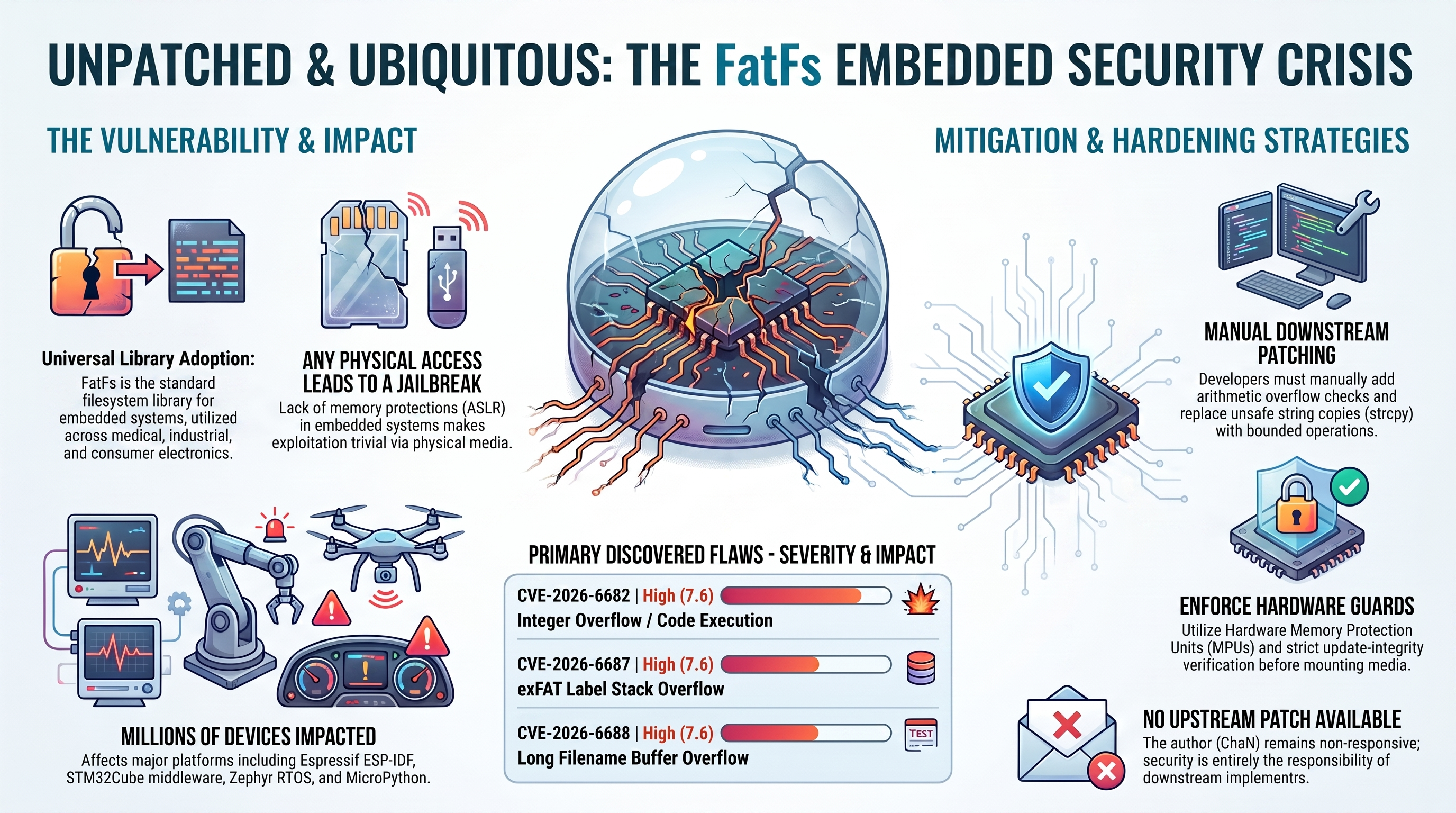
The Tiny Library in Millions of Devices: Unpacking the FatFs Security Crisis
RunZero discovered seven unpatched vulnerabilities in the FatFs filesystem library, a crucial yet overlooked component in modern technology, affecting various devices. Without centralized updates, security falls on developers. The findings highlight a significant supply chain risk, exposing devices to severe attacks, particularly through physical access, as AI advances in vulnerability detection.
-

The Future of Threat Intelligence is Here: It’s All About Machine Learning
The future of Threat Intelligence could replace the analyst with a AI bot…
-
The APTocalypse: Who’s Who in the World of Cyber Threats
This article introduces some of the latest and most notorious APT actors and their TTPs and gives some tips on how to defend against them.
-
Feeding Frenzy: The Inside Scoop on Threat Intelligence Feeds
http://ift.tt/MtkUnG Threat intelligence feeds have become a staple in the diet of analysts and security professionals at organizations large and small. Some feeds are free, others are offered for sale from security vendors. They can also come in a dizzying array of formats, varying sizes, and include threat information that may or may not add…
-
Inside the Mind of Cyber Criminals
http://ift.tt/2fYHoOs To learn more about how cyber criminals operate in the dark web, we asked our own Andrei Barysevich a few questions. Below is what he had to say. You have spent a great deal of time studying actual cyber crime activity, forums, and behavior in recent months. What are some of the things you’ve…
-
The Cyber Threat at Your Doorstep: Location-Specific Threat Intelligence
Analysis Summary A location-specific cyber risk program evaluates cyber threats and risk at non-HQ locations to increase an organization’s information security. Recorded Future expedites threat assessments — down to just two hours to generate an initial threat assessment for a country. Without Recorded Future, two people would need at least two months per country. Recorded…
-
Recorded Future Announces Its Participation in Splunk’s Adaptive Response Initiative
Earlier this year, Splunk announced their Adaptive Response Initiative — an effort bringing best-in-breed security capabilities together in ways that will improve an organization’s ability to defend against advanced attacks. At the core of the initiative is a new version of Splunk Enterprise Security, scheduled to be generally available soon, that facilitates bi-directional integrations from…
-
Effective DarkComet RAT Analysis in 10 Minutes and 3 Clicks
Key Takeaways DarkComet RAT controller identified via a Recorded Future and Shodan alert. 10 minutes and three Recorded Future Intel Cards (including embedded Farsight Security and ReversingLabs insight) produced a substantial lead toward probable cause and a successful criminal investigation. IP Address: 73.77.225.59:1604 (Comcast Cable, Texas) Associated Domain: shadows.sytes[.]net (No-IP Dynamic DNS) Malware: b5462c4312a587171c400953f8fd79f0 (MD5)…